
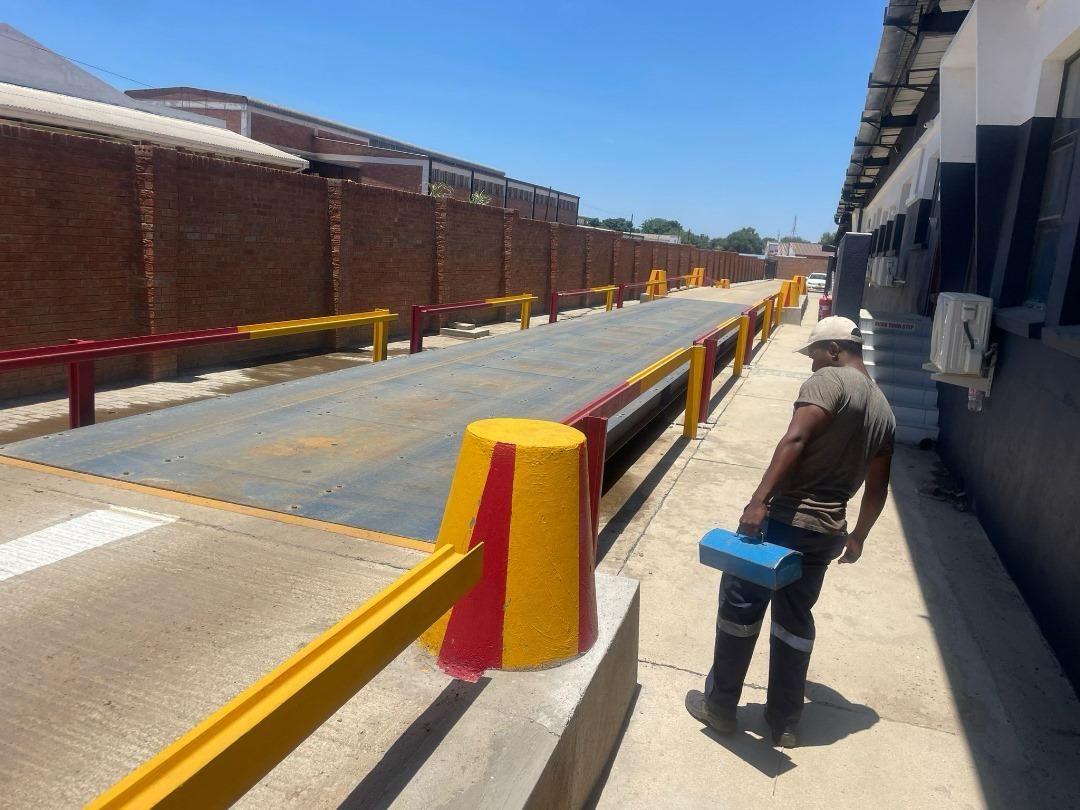
A weighbridge rarely fails all at once. It drifts. A load cell takes on moisture, mud builds up under the deck, a cable gets nicked. Each problem moves the reading by a few kilograms. On a weighbridge that handles dozens of trucks a day, a few kilograms per load soon becomes tonnes.
So how often should yours be looked at? The short answer is a planned service at least once or twice a year, plus a verification with certified test weights at least once a year. Busier or harsher sites need more. The longer answer depends on how hard your weighbridge works.
Calibration and verification are not the same thing
The two words get used as if they mean the same, but they don't.
- Calibration is adjusting the system so the indicator reads correctly against a known load.
- Verification is proving that it does. A technician places certified test weights on the deck, records the results, and issues a dated certificate.
You need both. Calibration fixes the reading. Verification gives you the paperwork that shows it's right.
What the law expects
If your weighbridge is used for trade, meaning you buy or sell by the weight it shows, Zimbabwe's Trade Measures Act [Chapter 14:23] applies. The Act requires equipment used in trade to be assized before use: examined, tested and stamped if it's found correct. Trade Measures inspectors have powers to enter premises and inspect equipment.
A current, dated verification certificate is the easiest way to show an inspector, an auditor or an unhappy customer that your weights can be trusted.
A practical schedule
Every site is different, but this is a sensible starting point:
- Light use (a farm or small yard, a few weighings a day): a planned service once a year, and verification once a year.
- Regular use (mills, depots, steady daily traffic): a planned service every 6 months, and verification once a year.
- Heavy use (mines, haulage yards, quarries, constant traffic): a planned service every 3 to 4 months, and verification at least once a year and after any major repair.
Whatever the schedule, always book a check after:
- a lightning strike or electrical storm near the site
- an overload, or a vehicle hitting the deck or the ramps hard
- any load cell, cable or indicator repair
- moving the weighbridge or doing civil works around it
- flooding of the pit or foundation
Why it pays
Take a weighbridge that is reading 0.5% light. On a 40-tonne load, that's 200 kg. Across 30 loads a day, it adds up to 6 tonnes a day that you are either giving away or being blamed for. A planned service usually costs less than one day of that error.
What you can do between visits
Most problems show up early if someone is looking:
- Check zero every morning. With the deck empty, the indicator should read zero. If it doesn't settle, note it.
- Keep the deck and the gaps clean. Stones, mud and coal fines jammed between the deck and the foundation take weight off the load cells.
- Clear the pit drains before the rains. Standing water is the enemy of load cells and junction boxes.
- Keep a simple log. Date, zero reading, anything unusual. It helps us find a fault faster.
Book your next service
Premier Scales has been servicing and verifying weighbridges across Zimbabwe since 1993. We use certified test weights and leave you with a dated certificate. If you can't remember when your weighbridge was last verified, it's probably time.
Book a service or call us on +263 461995-6.