
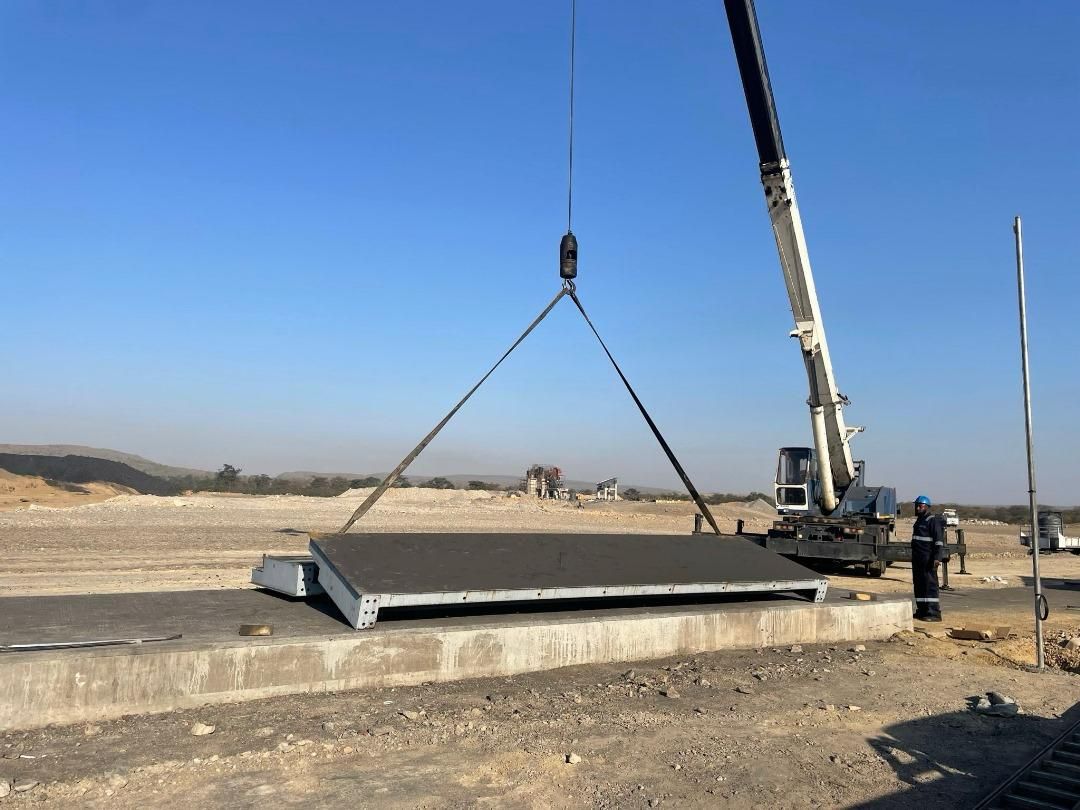
A weighbridge will work on your site for many years, so it's worth getting the specification right the first time. A deck that's too short, a capacity that's too low or a foundation that floods every rainy season will cost you for as long as the weighbridge is in the ground.
These are the questions we work through with every customer before recommending a weighbridge.
1. What vehicles will you weigh?
Start with the longest and heaviest vehicle that will cross the deck, not the typical one.
- Deck length. The whole vehicle should fit on the deck so it can be weighed in one go. Measure your longest truck or truck-and-trailer combination and leave some margin. Weighing axle by axle is possible but slower, and less accurate.
- Deck width. It must be wide enough for the widest vehicle, with room for drivers to line up without running a wheel off the edge.
2. How much capacity do you need?
Choose a capacity comfortably above the heaviest gross weight you expect. Loaded trucks are sometimes overloaded, and a weighbridge that is regularly pushed to its limit wears faster. Mines and haulage yards usually need more capacity than a farm or a mill. We'll help you size it to your traffic.
3. Pit-mounted or surface-mounted?
This is the biggest decision, and it depends on your site.
Pit-mounted weighbridges sit in a concrete pit, with the deck level with the ground.
- No ramps, so vehicles can approach from either end and less space is needed.
- Needs more civil work, and the pit must drain properly.
- The pit has to be kept clean, or debris and water will affect the weights.
Surface-mounted weighbridges sit on a foundation at ground level, with ramps at each end.
- Less civil work, so usually quicker and cheaper to install.
- Easier to clean underneath and to inspect.
- Needs extra space for the ramps on both ends.
- Can be moved later if your site layout changes.
On sites where water collects or space for ramps is short, the choice is often made for you. A site assessment shows which option suits your ground.
4. Steel or concrete deck?
Steel decks are lighter and quicker to install. Concrete decks are very hard-wearing and handle heavy, constant traffic well. Both work. The right answer depends on your traffic, budget and how quickly you need it running.
5. What happens to the weights?
The weighbridge is only half the system. Think about how you'll record and use the weights:
- Do you need printed tickets for drivers?
- Should weights go straight into weighbridge software or your stock system?
- Will you weigh vehicles in and out to work out the net load?
Sorting this out before installation saves a lot of paperwork later.
6. Plan for the rainy season
Drainage, approach surfaces and protection for the cables and indicator matter as much as the weighbridge itself. Good drainage keeps the load cells dry, and good lightning and surge protection keeps the electronics alive through the storm season.
Talk to us before you buy
Premier Scales has been supplying, installing and maintaining weighbridges across Zimbabwe since 1993, for mines, mills, farms and haulage yards. We'll assess your site, recommend the right specification, install and commission the weighbridge, and verify it, so your first weigh-in is accurate and compliant.
Get in touch or call us on +263 461995-6.